Structural Simulation Services | Industrial Steel Structures | Seismic Analysis & Design Validation
Ensuring safety, compliance, cost efficiency, and performance in industrial structures
Structural Static Analysis is the evaluation of structural behavior under steady (non-time-varying) loads, determining stresses, deformations, and stability when subjected to forces that remain constant over time.
Static analysis applies when:
| Analysis Type | Purpose | Typical Applications |
|---|---|---|
| Linear Static | Assumes material remains elastic and small deformations | Standard building frames, support structures |
| Nonlinear Static | Accounts for plastic deformation, large displacements | Heavy machinery supports, seismic pushover analysis |
| Buckling Analysis | Determines critical buckling loads | Slender columns, thin-walled structures |
| Benefit | Impact |
|---|---|
| Safety Assurance | Prevents overstress conditions before construction |
| Cost Savings | Optimizes material usage (5-20% steel reduction typical) |
| Regulatory Compliance | Meets PE certification and building code requirements |
| Risk Reduction | Identifies potential failure points early |
Dynamic Analysis evaluates structural behavior under time-varying loads, accounting for inertia and damping effects that static analysis cannot address. It's essential when structures experience:
Dynamic analysis becomes critical when:
| Method | Application | NESTech Example |
|---|---|---|
| Modal Analysis | Determines natural frequencies and mode shapes | Preventing conveyor resonance with machine vibrations |
| Harmonic Analysis | Steady-state vibration from cyclic loads | Pump foundation design (50Hz motor vibration) |
| Transient Analysis | Time-history response to impact/short-duration loads | Waste handling plant impact from material drops |
| Response Spectrum Analysis | Seismic evaluation using code spectra | Biogas plant in Zone IV (IS 1893) |
| Random Vibration Analysis | Non-periodic loads (wind turbulence) | Tall silo clusters in windy regions |
| Factor | Static Analysis | Dynamic Analysis |
|---|---|---|
| Load Consideration | Constant loads | Time-varying loads |
| Inertia Effects | Neglected | Explicitly included |
| Results Output | Single solution | Time-history response |
| Typical Software | STAAD.Pro, SAP2000 | ANSYS Mechanical, ABAQUS |
Seismic Analysis evaluates how structures withstand earthquake-induced ground motions, ensuring life safety and operational continuity in seismic zones. NESTech specializes in site-specific analysis for industrial facilities.
Mandatory for structures in seismic zones when:
| Method | Application | NESTech Implementation |
|---|---|---|
| Equivalent Lateral Force (ELF) | Regular structures in low-moderate zones | Quick screening for small industrial buildings |
| Response Spectrum Analysis | Complex geometries, high seismic zones | Biogas plants, tall silos (Zone IV/V) |
| Time History Analysis | Critical facilities near fault lines | Using actual earthquake records |
| Pushover Analysis | Evaluating ductility and failure modes | Retrofit projects for existing structures |
| Parameter | Code Reference | NESTech Approach |
|---|---|---|
| Zone Factor (Z) | IS 1893 Table 2 | Site-specific microzonation when available |
| Response Reduction (R) | IS 1893 Table 7 | Conservative values for industrial structures |
| Importance Factor (I) | IS 1893 Table 6 | I=1.5 for hazardous facilities |
| Soil-Structure Interaction | IS 1893 Clause 6.3.5 | Spring modeling for soft soils |
| Deficiency | Retrofit Solution | NESTech Case Example |
|---|---|---|
| Soft Story | Steel bracing or shear walls | Waste plant control building |
| Weak Connections | Moment-resisting frames | Conveyor support gallery |
| Pounding Risk | Seismic gaps or linking | Adjacent silo structures |
Connections Analysis evaluates how structural members transfer forces at joints - the most critical yet vulnerable points in steel structures. NESTech specializes in industrial-grade connections for:
Over 80% of structural failures originate at connections due to:
| Connection Type | Industrial Applications | Key Analysis Parameters |
|---|---|---|
| Bolted Shear Connections | Conveyor supports, walkways | Bolt shear capacity, bearing strength, slip resistance |
| Moment Connections | Heavy equipment supports | Flange weld strength, panel zone shear |
| Base Plate Connections | Column foundations | Anchor bolt tension, concrete breakout |
| Bracing Connections | Seismic-resistant frames | Gusset plate buckling, Whitmore section |
| Splice Connections | Tower structures, long-span beams | Shear lag effects, block shear |
| Requirement | NESTech Approach |
|---|---|
| PE Certification | Detailed calculation packages with hand checks |
| Fabrication Drawings | Weld symbols, bolt grades, and hole types per AISC 303 |
| Inspection Protocols | VT/MT/UT requirements callouts |
| Failure Mode | NESTech Mitigation Strategy |
|---|---|
| Bolt Shear Failure | Double shear connections where needed |
| Weld Cracking | Controlled deposition sequences |
| Lamellar Tearing | Z-quality plates for thick sections |
Foundation Analysis evaluates how structural loads transfer safely to the ground while meeting serviceability requirements. NESTech specializes in industrial foundation design for:
Proper foundation design prevents:
NESTech's analysis ensures:
| Foundation Type | Typical Applications | Key Analysis Parameters |
|---|---|---|
| Spread Footings | Equipment pedestals Small structures Isolated columns |
Bearing capacity (IS
6403) One-way/two-way shear Settlement calculations |
| Combined Footings | Closely spaced columns Equipment skids Pipe racks |
Eccentric loading effects Pressure distribution Strap beam design |
| Mat Foundations | Heavy equipment Storage tanks High-rise structures |
Soil-structure interaction Differential settlement Finite element modeling |
| Pile Foundations | Soft soils High loads Seismic zones |
Axial capacity (IS
2911) Lateral load resistance Group efficiency factors |
Structural Simulation Services | Industrial Steel Structures | Seismic Analysis & Design Validation
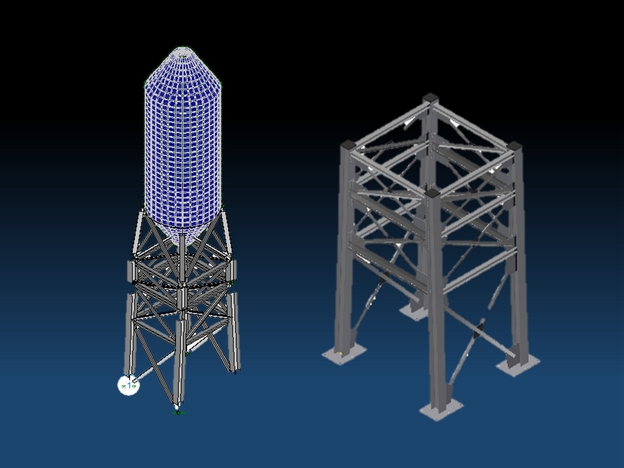
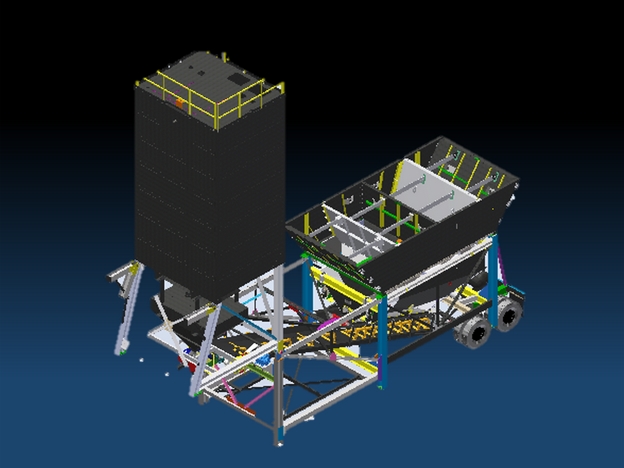
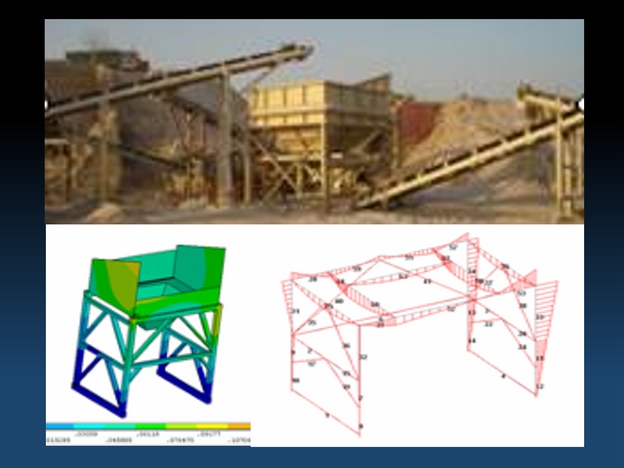
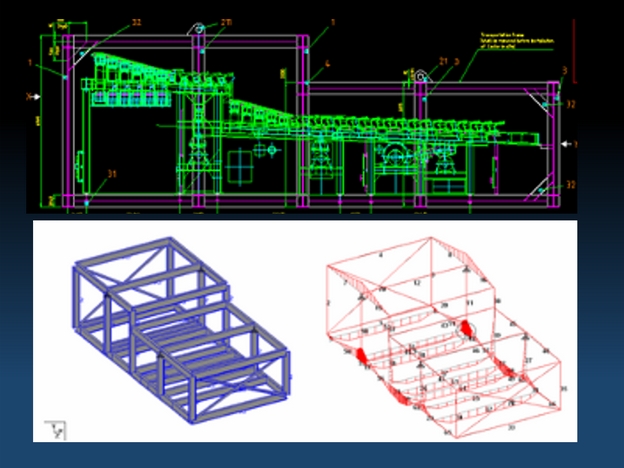
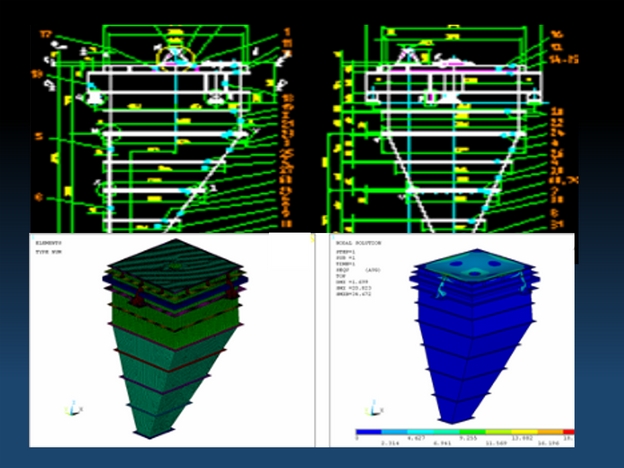
Structural, seismic and fatigue analysis done. Suitable section thicknesses and fabrication drawings are supplied to US based customer.